


Digital accessibility is one of the key aspects we strive for when developing our products. We aim to ensure that our solutions can be used equally by everyone, regardless of whether they encounter disabilities in their lives. We recognize different forms of disabilities. These can be sensory, motor, or cognitive. Disabilities can be permanent, temporary, or situational.
Whenever we talk about accessibility, we must understand that a person does not necessarily need to have official disability status to face barriers. We are addressing very diverse user groups with different needs for adjustments.
Types of Disabilities
Microsoft emphasizes that disability is not merely a physical limitation but rather a mismatch in human interactions.¹ To ensure accessibility, we must first understand whom we want to help.
Here we distinguish several groups of users:
Blind and visually impaired
Blind users often rely on screen readers when working with computers. For screen readers to function properly, we must provide alternative text. These are used to describe images, graphics, and more complex diagrams–essentially anything that other users can see.
For visually impaired users, we must ensure appropriate contrast and the possibility of enlargements without content loss.
People with situational and temporary impairments
Here too, we are addressing a wide range of people we want to help. This includes older users who may see less well and need larger buttons. Another large group are users with injuries, for whom a keyboard may make tasks easier. Or users who, due to situational factors, need subtitles–such as a student watching a video in a library. This also includes users who have only 5% battery left on their phone and therefore need stronger contrast.
Deaf and hard of hearing
For them, subtitles in videos, transcripts of audio content, and in some cases an interpreter for Slovenian Sign Language are essential.
People with neurological or cognitive impairments
This is a very diverse group that requires simple and consistent navigation, clear language, and the avoidance of distracting elements such as rapidly flashing animations.
People with mobility impairments
To navigate digital content, they need the option to operate everything solely with a keyboard.
Why is Accessibility Important?
According to European estimates, as many as 10–15% of people have some form of disability. Around 20% of the elderly are not even included in these statistics. In Slovenia, 13.1% of people face disabilities.² Looking at these numbers, it is clear that this is a significant share of users whose experience we can improve through accessibility.
Our Philosophy: No Plugins, Built from the Ground Up
Every project of an accessible digital solution at our company starts with the client. Together, we define goals, scope, and timeline. Depending on the project, we also conduct an assessment of how accessible the existing solution is and whether it is reasonable to renovate it or start from scratch. Such an analysis ensures a solid foundation, directing the project from the beginning towards the users and simple maintenance and scalability in the future.
We often encounter the misconception that ensuring accessibility can be solved with a simple plugin. In reality, that only fixes surface-level problems, while most key barriers arise already in design and development – where plugins have no effect. At our company, accessibility is built from the ground up. This means it is integrated already in the planning, design, and coding stages – not as an afterthought. In this way, we effectively reduce technical debt that would otherwise accumulate if accessibility were ignored.
From Concept to Accessible Solution
The development of accessible digital solutions involves everyone–designers, developers, testers, managers, and decision–makers.
Planning and Design
According to research by the A11y organization, as much as 67% of accessibility-related issues originate from design.³ This includes font choices, adherence to contrast ratios, designing functionalities so that they can be operated with a keyboard, and accounting for multimedia accessibility. It also includes setting alternative texts, structuring content so that screen reader users can efficiently navigate, ensuring responsiveness at various zoom levels, handling focus states, and in general, how to optimally structure content.
Development and Testing
In the development phase, developers support and adapt all of these aspects so that content can be operated via keyboard or screen reader. The product is thoroughly tested, bugs are fixed, and it is handed over to end managers.
Content Management and Entry
Once this stage is ready, training is provided to the managers. They will enter the final content and, in the long run, ensure the accuracy of alternative texts, clarity of links, and readability of prepared texts and similar content.
It is important for all stakeholders to understand when an element must have alternative text and when it is better hidden from screen readers, so the user only hears the information truly relevant to them. The same applies to transparency, where the end user must know where a link will lead, even without full context.
Together, we can create products that are accessible and user-friendly for all, while also scalable and not bringing long-term technical debt with high maintenance costs.
Let’s build products that are accessible, user-friendly, scalable, and future-ready. This is the essence of our philosophy and the reason why clients choose to return to us.
Standards and Legal Aspects of Digital Accessibility
In the field of digital accessibility, several standards apply, which are legally binding. These include the WCAG standard, the European standard SIST EN 301 549 (EN 301 549 – Harmonised European standard on accessibility), and ZDSMA at the level of Slovenian legislation.
At the AA level, the following are legally obliged to comply:4
- State authorities of the Republic of Slovenia;
- Local self-government authorities;
- Other public law entities.⁵
We believe it is worthwhile to work on accessibility even if we are not directly obliged to do so.
Requirements under ZDSMA (Article 5):
- PERCEIVABILITY– content must be presented in such a way that users can perceive it.
- OPERABILITY– user interfaces must allow interactions that users can perform.
- UNDERSTANDABILITY– content and user interfaces must be understandable for users.
- ROBUSTNESS– with the development of technologies and user interfaces, content must remain accessible.
Accessibility Statement (Article 7)
The accessibility statement is a key document in the field of accessibility and must be an integral part of all our digital products. The obligated party must prepare the accessibility statement in detail, thoroughly, and clearly, and must update it regularly – at least once a year.
The accessibility statement must include:
-
An explanation of which parts of the content are not accessible, the reasons for such inaccessibility, and a description of alternative solutions;
-
A description of the feedback mechanism under Article 8 of this Act and a link to it;
-
Information on inspection oversight under Article 10 of this Act and a link to the website of the competent supervisory authority.
Accessibility for a Friendlier Tomorrow
Accessibility is not something distant – we all encounter it, every day. When our phone battery runs out and we need stronger contrast. When our parents appreciate larger buttons on the screen. Or when we break an arm and discover how valuable keyboard navigation really is. This is the reality people with disabilities face every single day. User groups are very diverse, and so are their needs.
Even small adjustments can make a huge difference – for people with disabilities as well as for other users. The key to accessibility lies in empathy and understanding of how to improve someone’s user experience.
At Solve-X, we see accessibility as an opportunity, not a burden. Together with our clients, we create digital products that we strive to make as accessible, scalable, and user-friendly as possible.
1 Inclusive 101 Guidebook, p 12, https://inclusive.microsoft.design/tools-and-activities/Inclusive101Guidebook.pdf
2 Conference Presentation “Opportunities in the Field of Digital Accessibility”, p 12, https://digitalnadostopnost.si/gradiva/240409_PODD_Predstavitev_Objava.pdf
3 Conference Presentation “Opportunities in the Field of Digital Accessibility”, p 26, https://digitalnadostopnost.si/gradiva/240409_PODD_Predstavitev_Objava.pdf
4 Conference Presentation “Opportunities in the Field of Digital Accessibility”, p 41, https://digitalnadostopnost.si/gradiva/240409_PODD_Predstavitev_Objava.pdf
5 The definition of another public law entity is set out in the third paragraph of Article 9 of the Public Procurement Act and stipulates that a public law entity must be established with the specific purpose of meeting needs of general interest that are not of an industrial or commercial nature. Needs are considered to be of an industrial or commercial nature if an entity, operating under conditions of free competition on the market alongside other entities, carries out economic activities aimed at supplying goods or services to private or public economic operators. Such an entity must be a legal person and be financed in more than 50 percent by state or local authorities or other public law entities, or be under the managerial supervision of such authorities or entities, or have an administrative, management, or supervisory body in which more than half of the members are appointed by state or local authorities or other public law entities.
This year, Solve-X is celebrating an important milestone, 10 years of operation. This decade tells a story of vision, courage, learning, perseverance, and an exceptional team that grew from humble beginnings into a successful tech company with a presence both locally and internationally.
From first spark to first team
The roots of Solve-X trace back to a time before the company even existed,when founder Borut Jakovac was imagining a world where software could be built like Lego sets: piece by piece, flexibly and intelligently. This vision eventually became WARPIT, the very first product born from that idea.
By 2015, that vision matured into a company, Solve-X, launched by a small but fiercely passionate group of students. These early projects weren’t glamorous; they were built for survival, for learning. But even then, a bigger dream was taking shape: creating modular, event-driven systems based on trusted, universal standards.
Reflecting on those early days, Director Borut Jakovac shared:
“Even back then, inspired perhaps by the simplicity of Lego blocks, I was thinking about composable software architectures and closely watching every small and big digital revolution. A small group of students appeared, willing to believe in my idea — and in turn, they gave me hope that we could create something extraordinary together.”

Solve-X team conquered Triglav in 2019
Rapid growth and major milestones
Between 2020 and 2023, Solve-X entered a phase of intense development. The pandemic pushed the world even deeper into digital, and the economic climate demanded quick adaptation and the rollout of smart digital solutions. This brought new opportunities for the company.
It was during this period that our first major clients emerged — Avto Krka, Big Bang, and T2 — pushing the team beyond its comfort zone and helping shape higher-level technological solutions. Solve-X began developing its own products, investing in Kubernetes infrastructure, and gaining recognition in the public sector.
Borut reflects on this time:
“Those moments were valuable because they pushed us forward — beyond our comfort zone — and often helped us see the tech world in a new light, rethink our approach, and accelerate not only our personal growth but also the evolution of the company.”
Maturity and international expansion
In the past two years, Solve-X has established itself as a mature company with over 60 employees. We introduced four development pillars:
- Digitalization and automation of processes
- BPMN 2.0 microservices
- Data-driven solutions
- UX-UI design
We’ve developed 23 products, with 5 already transitioning to SaaS. A major milestone was the establishment of our R&D department and company registration with ARIS. Our presence has also expanded to the USA and Sweden.
Moving forward with knowledge and values
Looking ahead, we have ambitious plans: Continued certifications (Kubernetes, Java, .NET, Oracle, AI ISO standards, etc.), expanding across European markets, strengthening our footprint in the USA.
Our vision remains clear: to create value through knowledge, standards, consulting, and innovative products.
But Solve-X isn’t just about products and certifications — we are, first and foremost, people. A team that grows together, learns, celebrates success, shares challenges, supports one another, and builds a company rooted in strong values.
As Borut highlighted:
“We are the company. It brings me joy to see how you’re growing and maturing. I’m honored to call us a team — and grateful that you’ve chosen to walk part of your path with us.”
We are committed to a vision of a better world — where technology serves people — and we bring that vision to life every day, together.
Here’s to the next 10 years! 🥂
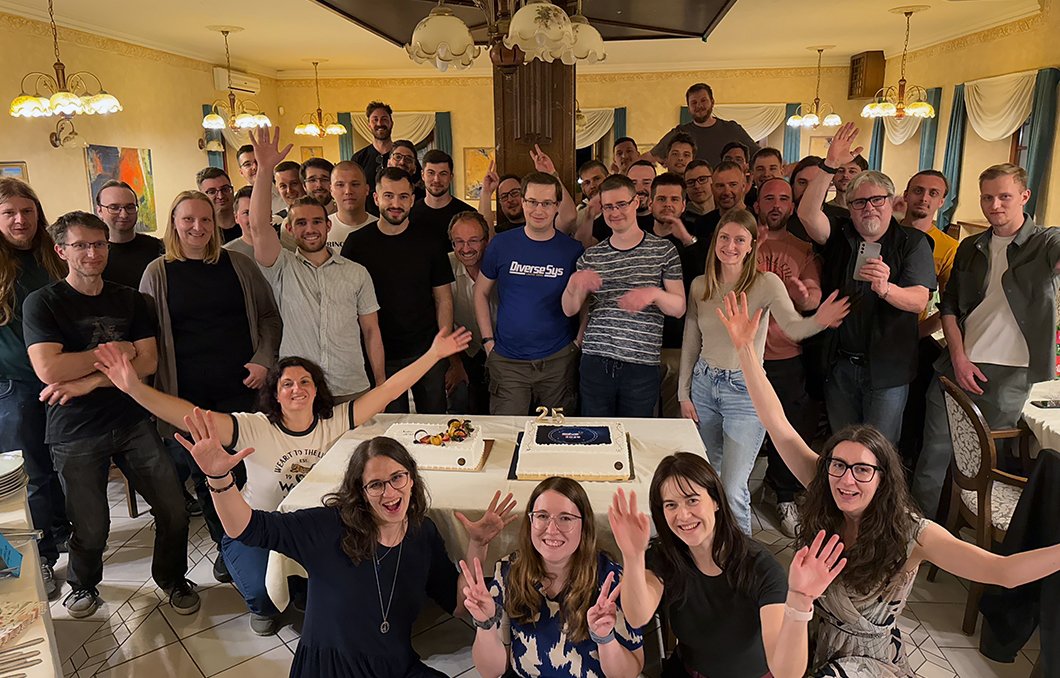
Solve-X team today
In the digital age, where online privacy faces constant challenges, the General Data Protection Regulation (GDPR) has laid the foundations for the handling of personal data. GDPR has set strict requirements for obtaining consents, processing data, and enhancing the rights of individuals, forcing companies to re-examine their data handling procedures.
As always, the dynamic development of technology has called for additional regulations. With the new Electronic Communications Act (ZEKom-1) and its updated version ZEKom-2, Slovenia is introducing a stricter regime for the use of cookies and similar tracking technologies.
A Fresh Look at Cookies: Transition from Notification to Active Consent
The new laws emphasize “active consent.” This means that it is no longer sufficient for websites to just provide information about cookies; users must now explicitly express their consent before any non-essential cookie is loaded on their devices. The era of pre-ticked confirmation boxes is over—active consent is the new norm.
This shift reflects the Court of Justice of the European Union (CJEU) ruling in the Planet49 case, which further emphasizes the necessity of unambiguous, specific, and informed consent from users.
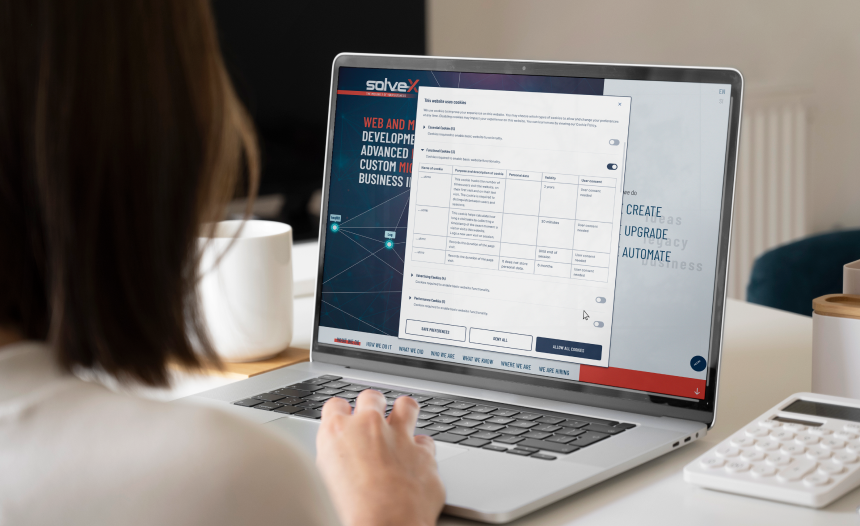
Cookie settings confirmation window
What Does This Mean for Website Owners?
Website owners are now faced with a new challenge: how to design consent acquisition procedures that are transparent, clear, and fully compliant with the new legislation. This includes understanding which cookies their sites use, which are essential for operation, and how to inform visitors about cookies that go beyond basic functionality.
Solve-X: Your Solution for Cookie Compliance
At Solve-X, we understand that adapting to constantly changing legislation can be challenging. Based on this, we offer a solution that simplifies the process of obtaining consents and managing cookies, while ensuring compliance with GDPR, ZEKom-1, and ZEKom-2.

Our team in web solutions development
Closing Thoughts
By tailoring websites to the latest legislative requirements, companies have the opportunity to reassess their cookie strategies and incorporate solutions that strengthen trust and transparency. With our cookie consent management platform, you can ensure that your websites not only meet current privacy protection requirements but do so without compromising the quality of the user experience.
Automated testing is an indispensable element of the modern software development cycle. With the development of tools like Playwright, QA teams can efficiently automate the testing of web applications across different browsers and devices. As software becomes increasingly complex and time to market becomes ever more critical, test automation has become an essential part of ensuring the quality and competitiveness of products in the market.
What does test automation bring?
Test automation with Playwright brings efficiency improvements, enabling the execution of a large number of tests in a short time. This not only increases team productivity but also reduces the need for valuable human resources for repetitive tasks. It also eliminates the possibility of human error, ensuring greater consistency and accuracy of results. The ability to perform extensive tests covering multiple functionalities and scenarios surpasses the limitations of manual testing and increases overall test coverage.

Detecting Bugs with Automatic Tests
Integrating automated tests into continuous integration and delivery (CI/CD) processes allows applications to be regularly and automatically tested with each new update or code addition, further reducing the chance of errors in production. Automated tests are also invaluable in conducting regression tests, ensuring that new changes do not negatively affect existing functionalities.
Integrating Playwright into QA processes
Integrating Playwright into QA processes brings rapid test automation with advanced features, allowing for shorter development and maintenance times for test scripts. Easy integration with CI/CD processes ensures broad test coverage and enables teams to quickly detect and correct errors, contributing to higher quality and reliability of final applications.
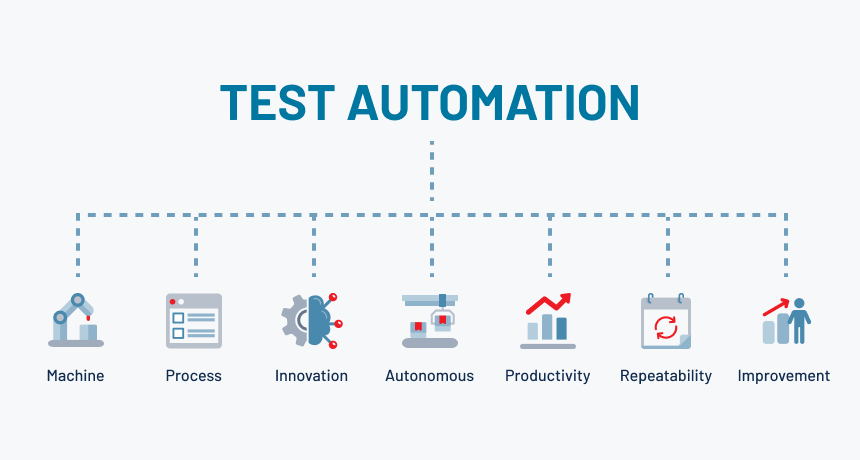
The Benefits of Test Automation in Quality Assurance
Benefits of automated testing with Playwright
Test case planning: Enables the identification of critical application functionalities that require automation, and promotes the development of thorough test case plans.
Test development: Provides tools for writing test scripts that simulate real user interactions using Playwright’s features.
Executing and maintaining tests: Facilitates the integration of Playwright scripts into CI/CD pipelines, allowing tests to be run automatically with every new push to the repository. It also encourages regular updates and adjustments to test scripts to stay aligned with application changes.
Results analysis: Enables thorough evaluation of test results to identify potential errors or browser compatibility issues.
Optimization: Encourages the optimization of test scripts to reduce false positives and ensure consistency and reliability of results.
Final Thoughts
Playwright enables QA engineers to test faster, more reliably, and more comprehensively, helping to reduce errors and improve application quality. Its introduction accelerates the release of high-quality applications, reduces the risks that manual tests might overlook, and optimizes the entire development process, leading to a better user experience.
Taking on the role of a team leader brings unique challenges and opportunities. My experience in this position has taught me that effective leadership goes beyond basic tasks such as assigning work and overseeing projects. At the heart of successful leadership is a deep understanding of individuals, their motivations, goals, and potentials. A leader must create an environment where every team member feels valued, understood, and motivated to grow.
Communication, Motivation, and Development
Effective communication is the foundation of every successful team. This means not only regular meetings and reports but also establishing a culture where every member feels safe enough to express their opinions, ideas, and concerns. Opening channels for two-way communication, such as one-on-one meetings, group discussions, and anonymous feedback, helps build trust and ensures that all team members are heard.
Motivation is key to determining productivity and employee satisfaction. When faced with budget constraints, we must explore alternative ways of motivation, such as opportunities for personal development, career advancement, working on projects that ignite passion, and introducing a recognition system for achievements. Understanding what motivates individuals and adjusting motivation strategies to meet these needs can significantly increase engagement and productivity.
Development, belonging, and a culture of success are key to the long-term success of the team. This includes continuous learning and professional development, as well as strengthening the sense of belonging and shared purpose among members. Involving the team in decision-making processes, transparency regarding the company’s goals and strategies, and celebrating shared successes strengthen team dynamics.

Effective communication is the foundation of every successful team
Building Interpersonal Relationships and Managing Conflicts
Informal gatherings and team-building activities are invaluable for building strong interpersonal relationships within the team. Finding the right balance that encourages relaxed interaction without affecting professionalism and work ethic is key. Every team faces conflicts sooner or later. Effective conflict management requires openness, empathy, and the leader’s ability to mediate and find a common solution. Building resilience within the team means promoting a culture where mistakes are seen as opportunities for learning.
Personal Development, Mentor, and Inclusion
Investing in the personal development of team members is not just an investment in their individual careers but also in the strength and success of the team as a whole. Introducing mentorship and coaching helps develop key skills such as leadership, communication, and problem-solving.
Diversity within the team brings a wide range of perspectives, ideas, and solutions. Leaders must create an inclusive environment where diversity is valued and respected, which means not only ensuring equal opportunities but also actively encouraging dialogue and understanding among team members with different backgrounds.

Team socializing outside work frameworks
Conclusion
Leading a team is a dynamic and multi-layered process. By creating an environment that encourages open communication, motivation, growth, belonging, and celebrating successes, leaders can build strong, motivated, and successful teams.
This approach not only improves the working atmosphere and productivity but also increases employee satisfaction and contributes to long-term success. By incorporating these elements into their leadership approach, a leader can shape a team that not only operates effectively but also inspires and exceeds all expectations.
In the dynamic world of software development, Quality Assurance (QA) stands as a cornerstone, ensuring that products not only meet customer expectations but also uphold the highest standards of reliability and performance. This article explores the role of QA in software development, emphasizing its importance in building trust and customer loyalty – from detecting and preventing bugs to enhancing usability and performance.
Importance of quality assurance
Quality assurance (QA) is a crucial aspect of any organization’s operations, ensuring that products, services, and processes meet established standards and customer expectations. Quality assurance acts as a guiding force for companies, helping them create products and services that match with what customers are looking for.
The end result? Laying the foundation for trust and customer loyalty. Imagine it as a carefully crafted playbook—standards and procedures that act as guardians, making sure any potential hiccups in the products are caught and addressed before they even become noticeable. It’s like having a reliable ally ensuring that everything runs smoothly, guaranteeing customers receive nothing but the best.
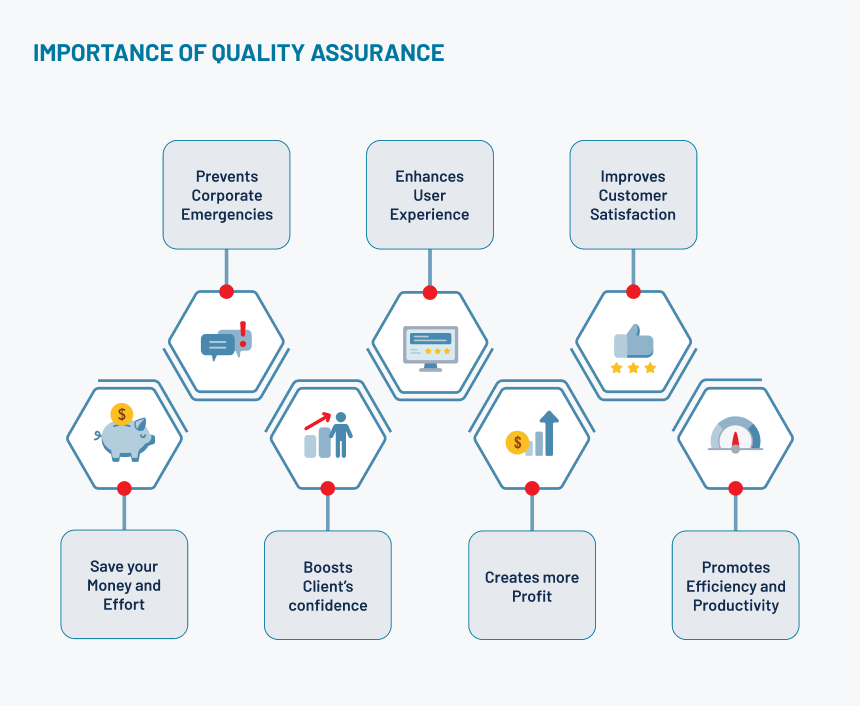
Advantages of Quality Assurance
Testing and objectives
Testing is a process of all life cycle activities, both static and dynamic, concerned with planning, preparation and evaluation of software products and related work products to determine that they satisfy specified requirements, to demonstrate that they are fit for purpose and to detect defects accordingly.

Quality Assurance – Bug Detection
Objectives of testing is to cover the following aspects:
1. Bug detection:
Testing aims to detect defects or bugs in the software. By executing test cases and scenarios, testers actively search for errors, inconsistencies, or unexpected behavior in the software. Identifying bugs early in the development cycle allows for timely resolution, reducing the risk of these issues reaching end users.
2. Bug prevention:
Testing also contributes to bug prevention by uncovering potential issues before they occur. Through thorough testing, developers and testers can identify areas of weakness or vulnerability in the software and take proactive measures to address them. By identifying and fixing these issues proactively, the likelihood of bugs surfacing in the future is reduced.
3. Ensuring quality of software/product:
One of the primary objectives of testing is to ensure the overall quality of the software or product. This involves assessing whether the software meets the defined quality standards, including functional requirements, performance criteria, and usability expectations. Testing helps validate that the software functions correctly and meets the desired level of quality and reliability.
4. Increasing customer satisfaction:
Testing contributes to customer satisfaction by ensuring that the software meets or exceeds customer expectations. By identifying and resolving bugs, improving performance and enhancing usability, testing helps create a more stable and user friendly software experience. This, in turn, leads to increased customer satisfaction and a positive perception of the software or product.
5. Improve security, usability, and performance:
Testing plays a crucial role in identifying and addressing security vulnerabilities, usability issues, and performance bottlenecks. Security testing helps identify and mitigate potential risks and vulnerabilities in the software, safeguarding sensitive data and protecting against potential attacks. Usability testing ensures that the software is intuitive, easy to navigate, and meets user expectations. Performance testing helps assess and optimize the software’s speed, responsiveness, and scalability, ensuring it performs well under various conditions.
6. Reduce cost:
Effective testing can contribute to cost reduction in several ways. By detecting and resolving bugs early, testing helps prevent costly rework or the need for extensive bug fixing later in the development process. Additionally, testing helps identify areas for optimization and efficiency improvement, leading to more streamlined processes and reduced resource requirements.
Conclusion
In conclusion, testing stands as a critical process integral to the entire life cycle of software development, encompassing both static and dynamic activities. The versatile objectives of testing are central to ensuring the robustness and reliability of software products. From bug detection, where testers thoroughly uncover defects through the execution of test cases, to bug prevention by proactively addressing potential vulnerabilities, testing serves as a proactive shield against software issues.
In our previous blog on machine learning titled “Machine Learning in Marketing Research,” we explored how machine learning significantly contributes to identifying fraudulent responses and detecting logical inconsistencies in survey data. This blog continues our in-depth discussion on machine learning, where we will investigate its advanced applications that radically transform our approach to understanding and utilizing market data.
As we delve deeper, we will reveal how advanced profiling, the creation of synthetic data, and precise emotion analysis not only enhance our understanding of market trends but also open new doors in the world of marketing research. With these machine learning techniques, we will explore new dimensions in consumer data analysis, enabling a better comprehension of consumer habits and preferences.
Advanced profiling
Machine learning empowers advanced profiling through clustering, a technique that groups similar survey responses based on their characteristics and patterns, unveiling population subgroups and underlying structures. With clustering, ML performs complex analyses that may be challenging for humans, driving exploratory analysis and anomaly detection, which can help us gain a deeper understanding of consumer preferences and perceptions by revealing the relationships between various interrelated attributes.
As the number of responses and attributes increases, clustering becomes more challenging, but the insights it offers are invaluable. To gain a deeper understanding of the clusters, statistical analyses such as descriptive statistics, analysis of variance (ANOVA), and discriminant analysis can be employed. Descriptive statistics involve calculating key metrics like mean, median, standard deviation, minimum, and maximum for each cluster to provide an overview of the central tendencies and variations within the groups, aiding in identifying patterns and trends. ANOVA goes beyond descriptive statistics by conducting statistical tests to determine if there are statistically significant differences in means between two or more clusters. Finally, discriminant analysis is a powerful tool that identifies the variables responsible for the separation between different clusters. Together, these analyses provide a comprehensive and in-depth understanding of the distinct consumer groups, empowering businesses with data-driven decisions and targeted strategies.

Clustering in Advanced Profiling
Synthetic data
Machine learning also enables the generation of synthetic data that mimics the characteristics and patterns of original data without containing any sensitive information. It serves as a cost-effective alternative for obtaining large volumes of data, especially when data collection is expensive. This process proves valuable in generating more examples of statistically representative data, particularly for demographics with limited numbers (such as males between 18-22), and enables statistical analyses dependent on sample size. Using algorithms that employ encoder Neural Networks (NNs), the original data distribution can be transformed into a latent distribution, which serves as the basis for creating synthetic data through random sampling and decoding.
However, while synthetic data mimics the real data, it may not capture all the nuances, outliers, and complex patterns present in the original dataset. It is crucial to recognize that synthetic data cannot replace the need for actual surveys, as it only complements real data by augmenting and diversifying the dataset, balancing classes, and increasing statistical power. Hence, careful assessment and validation of the quality of synthetic data are essential, and it is imperative to provide appropriate disclaimers when including synthetic data in analyses to understand the implications fully.

Generating Synthetic Data Example
Sentiment analysis
Machine learning plays a crucial role in facilitating sentiment analysis in marketing research, particularly in evaluating positive and negative sentiments in open-ended survey answers related to products, product parts, and product qualities. The process involves text pre-processing, including tokenization, lemmatization, and removing stopwords, followed by using sentiment lexicons to determine sentiment scores for each word. To enhance context consideration, recurrent neural networks (RNN) and BERT models can be employed, taking into account negation, intensifiers, and even semantics.
Additionally, machine learning enables text clustering by transforming survey responses into numerical vector representations using algorithms like TF-IDF or Word2Vec. Regular clustering techniques are then applied to group similar responses, followed by characterizing the clusters using keywords, word frequency visualizations (word clouds), or thematic grouping. This unsupervised approach allows researchers to gain insights into customer sentiments and preferences by effectively analyzing and organizing open-ended survey responses.

Visualization of Word Frequency
Conclusions
As we conclude our exploration of the role of machine learning in marketing research, it is increasingly clear that this technology brings revolutionary approaches to analyzing and interpreting market data. With advanced techniques such as profiling, creating synthetic data, and emotion analysis, machine learning unveils in-depth insights into consumer habits and preferences.
These innovations open new possibilities for developing more effective strategies and thoughtful business decisions, underpinned by precise and extensive data. Despite existing challenges such as ensuring quality and correct interpretation of data, these techniques offer invaluable worth in the rapidly changing world of market research. We hope this series of blogs has opened new horizons for you and encouraged further exploration and innovation in this fascinating field.
In our last articles on UX design, The Art and Science of User Experience Design and UX design: Exploring user behaviors for design success, we explored the planning and prototyping stages of building a user-centered product, and touched on the topic of UX laws that are deeply rooted in human behavior. Now it’s time to breathe life into our functional prototype using on-brand color and typography. We will also look at how animation can enhance the user’s experience to make it more delightful and fun to use.
Final polish and handoff
Now that you’ve stated exactly what the solution does and clearly defined flows of action users take to achieve their goal, it’s time to polish those wireframes with a clean user interface. Note that prototyping can happen even after the graphical elements like buttons, fonts, and colors are defined. This is because a lot of digital products are offered as a service and are constantly updated with new features, thus requiring iterations of different functions.
First, we’ll look at how color theory can aid us in crafting beautiful UIs and thus enhancing the user’s experience.
Impact of color
Color psychology in UX is important in convincing the user to make a purchase and also in establishing brand communication towards users. Since color is considered as the easiest element to remember, this element is applied in UX as well as marketing.
Color is a visual stimulus that immediately provokes emotions and reactions. Psychologists suggested that color impression accounts for 60% of the acceptance or rejection of a product. Thus, a bad color combination can greatly affect the whole user experience, with the same effect as a bad copy or a slow page loading time.
We all have color preferences, however, there are similarities of preferences among same age groups, between genders, and cultures. For example, research shows that bright colors like yellow and red are favored within a younger age group, while shorter wavelength colors like blue, violet, and green are preferred by adults and the elderly. Color meanings can also vary from cultures: in the West, white means innocence, aspiration, and hope. In Asia, however, white color is for death, mourning, and bad luck. As a UX designer, you need to be aware of these cultural connotations, especially if you are marketing for a specific location or culture group.
It is also important to factor in the number of colors used. We usually only stick to a few (one or two colors), and tend to use a lot of white space with accents of vibrant color to attract the eye to that particular element, usually in a way of a call to action (CTA). If you do use too many colors, especially if they’re all super bright, you’ll lose hierarchy with everything fighting for attention. 82% of all companies only use up to two colors incorporated in their logos.
The ‘60/30/10’ rule is that you have a primary color, which takes up a 60% ratio, and then a secondary color which takes up 30% and lastly an accent or touch of color which takes up 10%. Note the colors used in Instagram’s onboarding flow:
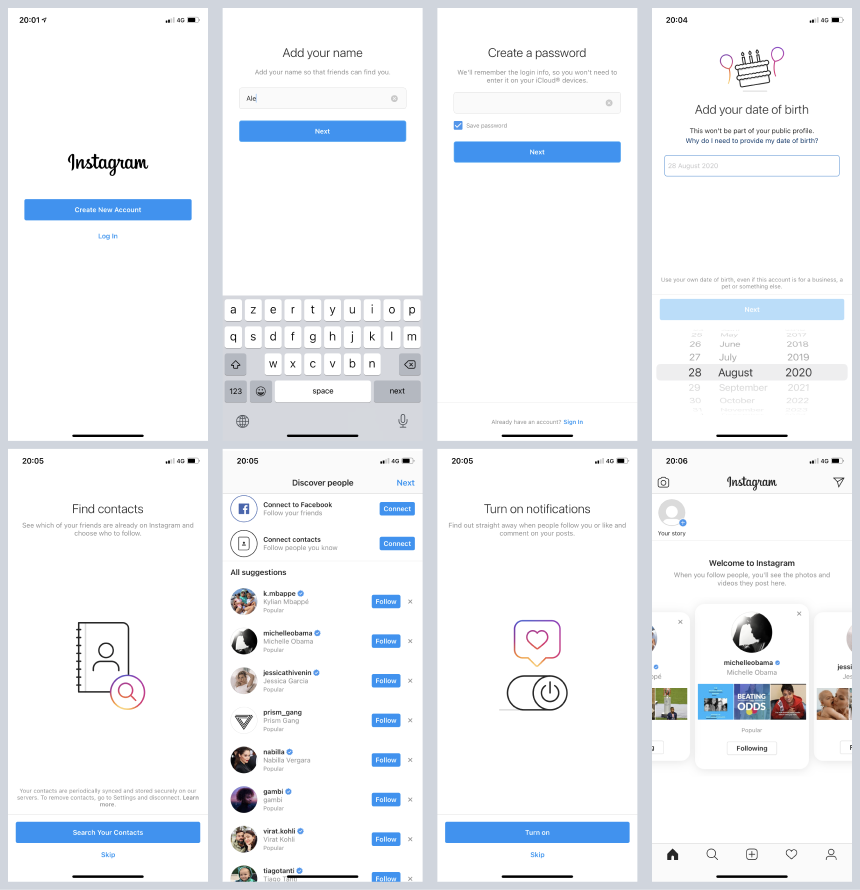
Parts of Instagram’s onboarding flow
Type
Typography in UX/UI design should increase the legibility of the message, increase engagement rates, complement the copy, and bring the overall user experience to a higher level. Good typography will capture attention and encourage users to start reading. That’s why UX and UI designers, UX writers, copywriters, and other marketing specialists often work together – to deliver enticing and captivating content that will look as good as it sounds.
Good fonts, proper spacing, and intelligent choices of colors and contrasts will make users engage more with the text of your digital product. Additionally, focusing on typography in UX/UI design also builds the image of your business. When the overall typography matches the brand identity, it leaves the impression that a company has its affairs in order. Such an impression immediately elevates users’ trust levels and builds recognition.
- You should use a maximum of two typefaces in your digital product. More than that will cause noise and disruption the readability.
- In case you don’t have a copywriter or UX writer in your team, always choose to make your text simple and sweet.
- Test the scales, animations if you have them, colors, and whitespaces; see what works best within your preferred users.
Animation
UX and UI designers use animation to guide them around the interface, alert users of a change, influence users’ decisions, and indicate a relationship between elements—among other uses. UI animation also reduces the mechanical feel of a website or app, creating a much more natural and intuitive experience.
In UI design, animation can be functional or decorative. Functional animation guides and informs the user in real-time, whereas decorative animation is an essential storytelling and branding tool. The most common UI animation types tend to fall into these four groups:
- Micro-interactions
- Loading and progress
- Navigation
- Storytelling and branding
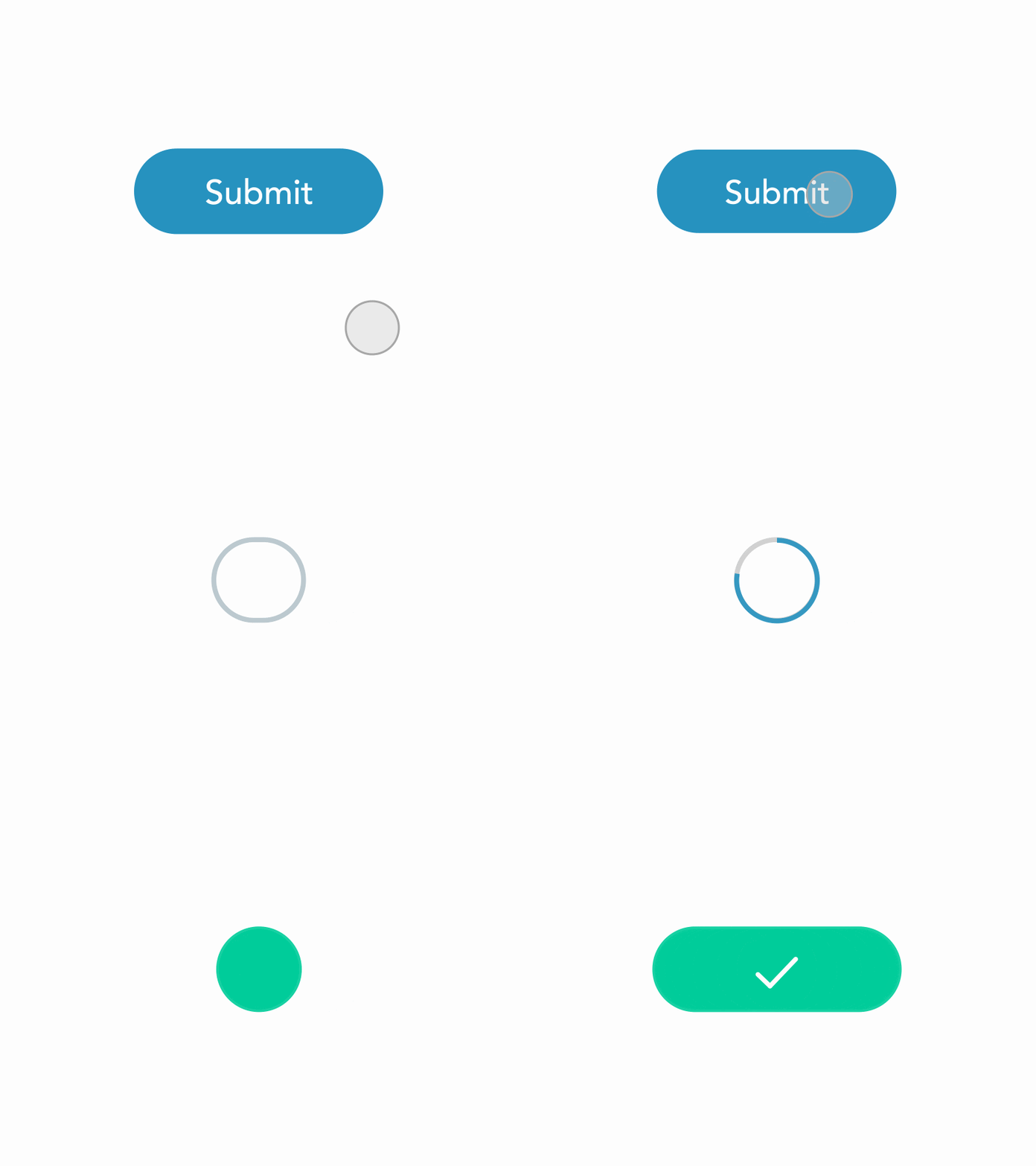
Example of micro-interaction animation that informs and delights the user in real-time
Final thoughts
We learned that while some people prefer certain colors to others, color plays an important role in perceiving and experiencing the product, and we should use it sparingly and in a way that guides the user to a specific action. Typography is also an important factor when perceiving the brand and tone at which something is presented – above all, make it legible and easy to read! Lastly, we learned that animation can aid in experiencing our interface in a more fluid and dynamic way as opposed to a static transition. All these should be taken into consideration if we want to create unique and delightful user experiences.
In today’s rapidly evolving business landscape, market research has become an indispensable tool for organizations seeking to gain a competitive edge. While traditional market research methods have proven valuable, the advent of machine learning has opened up a new realm of possibilities, revolutionizing the way businesses collect, analyze, and interpret data. In this article, we will explore the intersection of machine learning and market research, delving into the innovative applications, the benefits it offers, and how it empowers businesses to make data-driven decisions with unparalleled precision and efficiency.
Detecting logical inconsistencies
Machine learning is a game-changer in market research, enabling the seamless detection of logical inconsistencies within survey data. Logical inconsistencies in the context of market research refer to inconsistencies, contradictions, or anomalies in survey data. Leveraging AI and ML models automates this process, reducing the need for manual data analysis and interpretation, saving valuable time and effort. These models possess the remarkable capability to analyze vast volumes of survey data quickly and efficiently, even handling millions of responses. Their sophisticated pattern recognition abilities unveil complex and subtle inconsistencies, non-linear relationships, and hidden patterns that might escape manual scrutiny.
ML models continuously learn and adapt, honing their skills in identifying inconsistencies where traditional methods may struggle. By using Natural Language (NL) statements, ML models can effectively process survey questions, benefiting from rule-based approaches, NLP techniques, and pre-trained models like ChatGPT. Combining neural models like LLM, specific models like NLI, as well as syntactic, lexical, and semantic models enhances the detection of various dimensions of inconsistencies. This enables market researchers to set a benchmark by computing consistency scores for concluded surveys, leading to valuable insights and empowering businesses to make well-informed decisions. The added value of ML lies in its autonomous ability to discern and flag inconsistencies promptly, ensuring a proactive approach to survey data analysis.
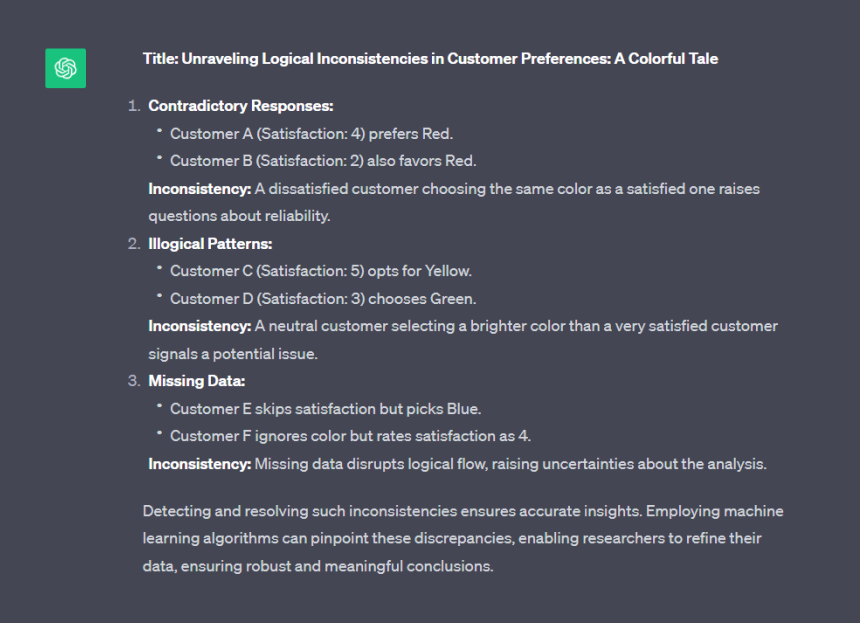
Logical inconsistencies example from ChatGPT
Detecting fraudulent answers
Machine learning proves invaluable in detecting fraudulent answers within survey data, going beyond merely identifying logical inconsistencies to ensure data integrity and accuracy. Traditionally, manually selecting features for fraud detection was subjective and time-consuming, but ML models excel at encompassing a wide array of features simultaneously. By leveraging ML algorithms, the model learns to distinguish deceptive responses, relieving the need for manual feature setting. Logical consistencies serve as one of the features to identify potential fraud, alongside time between answers, answer position patterns, statistics on open-ennded answers, user agent and user behavior analysis, and so on.
There are several ways to approach the model construction. In a supervised learning case, the data in the dataset is labeled as fraudulent or non-fraudulent prior to learning, while in a semi-supervised learning case, a small labeled set is used to generate additional labelled data from the larger (previously unlabelled) set. The ML model construction involves multiple steps, from exploratory analysis, data pre-processing, and splitting the dataset into training and test sets, to training the ML model, cross-validation, and evaluating the model’s performance on unseen data. With ML’s precision, accuracy, and robustness, fraudulent responses can be effectively detected, safeguarding the integrity of market research findings.
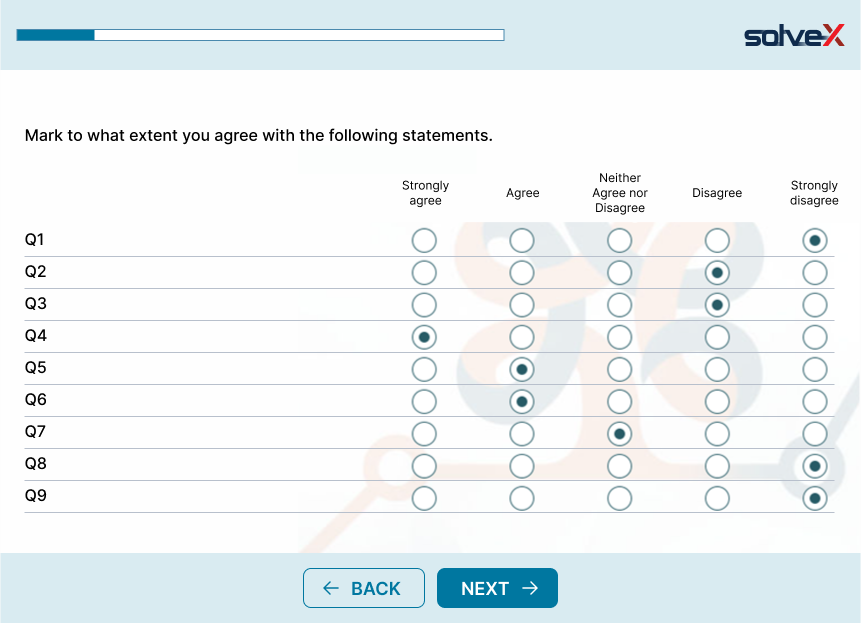
Example of fraudulent answers
Closing remarks
Machine learning will be crucial for future market research, automating the detection of logical inconsistencies in surveys and uncovering fraudulent responses. By employing artificial intelligence and machine learning models, organizations can swiftly analyze extensive data, saving time and effort. These models continuously learn and adapt, identifying complex patterns with precision and efficiency in analyses.
In an upcoming blog on this topic, we will delve into advanced profiling, synthetic data, and emotion analysis, unveiling new possibilities for machine learning in market research and enabling even more informed business decisions.
Whether you’re a rookie UX designer or an experienced product marketer, you need to be familiar with the foundational UX laws. These UX principles shed light on the psychology behind users’ expectations, therefore, following them is a must for anyone aiming to create winning designs.
We will highlight some of the principles and theories behind the design decisions we can make backed by psychology. By understanding how different psychological principles influence human behavior, we can design our products to elicit specific responses and actions from our target users.
A designer who doesn’t understand human psychologies is going to be no more successful than an architect who doesn’t understand physics.
— Joe Leech
Von Restorff effect
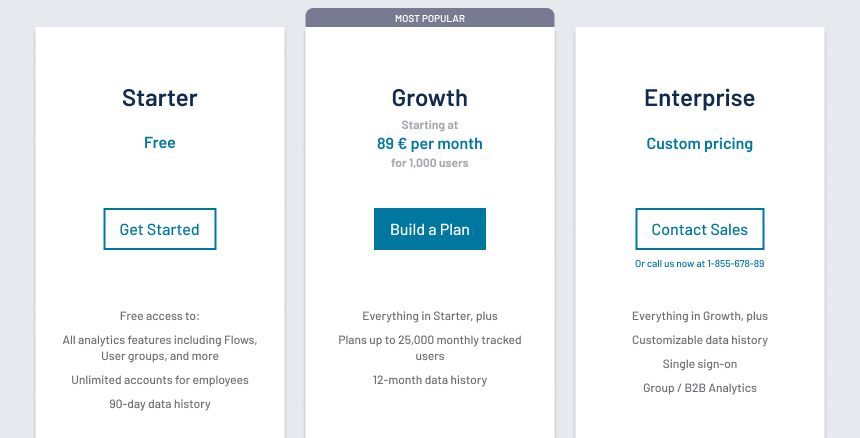
Also known as The Isolation Effect, the Von Restorff Effect predicts that when multiple similar objects are present, the one that differs from the rest is most likely to be remembered. This effect may seem simple at first but it creates great impact especially in the E-commerce space and pricing pages of the products.
Aesthetic-usability effect
This effect describes a paradox that people perceive aesthetic designs as much more intuitive than those considered to be less aesthetically pleasing.
People tend to believe that things that look better will work better — even if they aren’t actually more effective or efficient.
This effect is a major reason why a good user experience can’t just be a functional UI — designing an interface that’s attractive as well as functional is worth the resources.
Peak-end rule
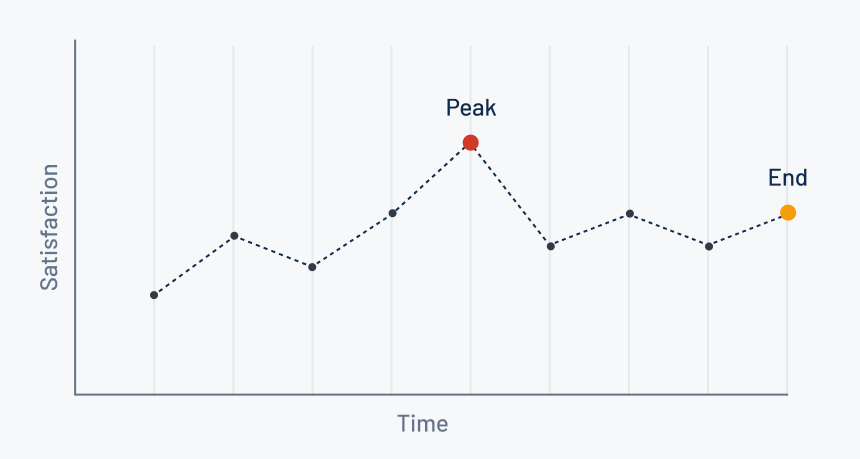
When designing interfaces and experiences, remember that people judge an experience based on its peak moments and its end, rather than the overall average. This holds true whether the experience is positive or negative.
Focus on enhancing the most intense points (the “peaks”) and the final moments (the “end”) of a user’s journey. Identify when your product is most valuable, helpful, or entertaining, and design to amplify those moments.
Take care to address any obstacles that hinder users from achieving their goals, such as finicky menus, illegible text, or intrusive advertising. Overcoming these difficulties is crucial, as they create a strong emotional impression that is just as memorable as the positive peaks.
Other laws and principles
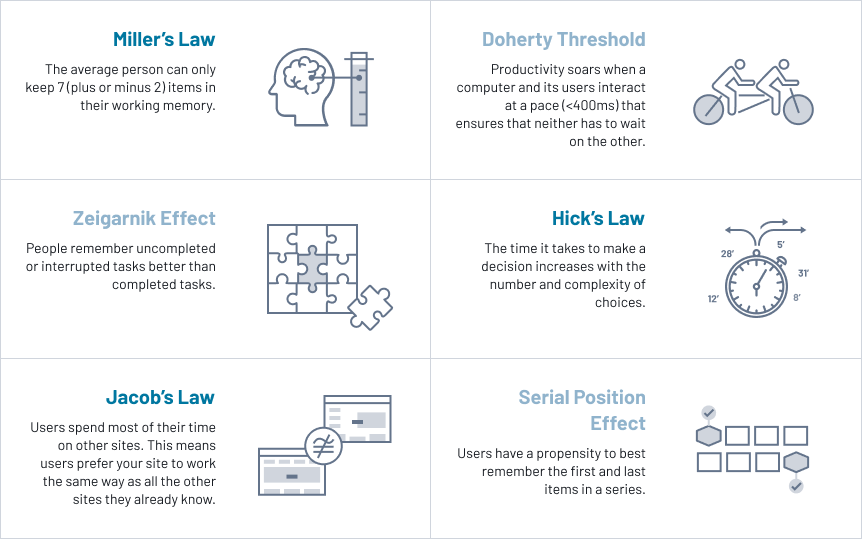
These laws and principles, alongside many others, are what UX designers must evaluate and take into account in order to craft products with good user experiences, which convert into quality products for brands. You can have a detailed read about these human behavior – related laws in this article UX laws: 21 principles for creating winning designs.